The Rise of Mobile Esports: Key Trends and Predictions Shaping Competitive Gaming
Mobile esports has moved well past the "it's just a phone game" dismissal. Today, tournaments fill stadiums in Manila and São Paulo, prize pools rival mid-tier PC events, and millions of viewers tune in on platforms built specifically for mobile-native content. Something fundamental has shifted — and it's worth understanding exactly why.
Why Mobile Esports Is Having Its Moment
Mobile esports is growing because three forces converged at once: affordable smartphones reached billions of new users, internet access expanded dramatically across developing markets, and major game publishers committed serious investment to building competitive ecosystems on mobile platforms.
A decade ago, competitive gaming meant a gaming PC or a console. The hardware cost alone locked out enormous portions of the global population. That barrier has largely collapsed. Entry-level Android devices capable of running competitive titles now cost less than many people spend on a monthly subscription bundle. Pair that with expanding 4G coverage and the early rollout of 5G connectivity in key markets, and you have the infrastructure for mass competitive participation.
Publishers noticed. Companies like Tencent, Garena, and Activision didn't just port games to mobile — they built titles from the ground up for touch-based competitive play, then funded league structures, regional qualifiers, and world championships to match. That publisher investment created legitimacy, and legitimacy attracted sponsors, broadcasters, and players who might otherwise have stayed on PC.
The Genres Driving Competitive Mobile Play
Battle royale and MOBA titles dominate mobile esports because their core mechanics translate naturally to touch controls and shorter session lengths — two qualities that matter enormously on a phone.
Battle royale games like PUBG Mobile and Free Fire reward spatial awareness and quick decision-making. On a touchscreen, gyroscope aiming and customizable HUD layouts let skilled players develop genuinely high-ceiling mechanics. The format also fits mobile viewing: matches are self-contained, tension builds visibly, and the last-player-standing climax is universally readable to any audience.
MOBAs like Mobile Legends: Bang Bang and Honor of Kings brought the genre's team-strategy depth to a platform where matches run 15-20 minutes rather than 40-50. That compression didn't strip out the skill — it concentrated it. Drafting, lane pressure, and objective control all matter just as much; games simply move faster. Real-time strategy titles occupy a smaller but dedicated competitive niche, appealing to players who want a different kind of cognitive challenge.
What these genres share is spectator clarity. Viewers can follow the action without needing deep game knowledge, which is essential for building the casual audience that makes esports broadcasts commercially viable.
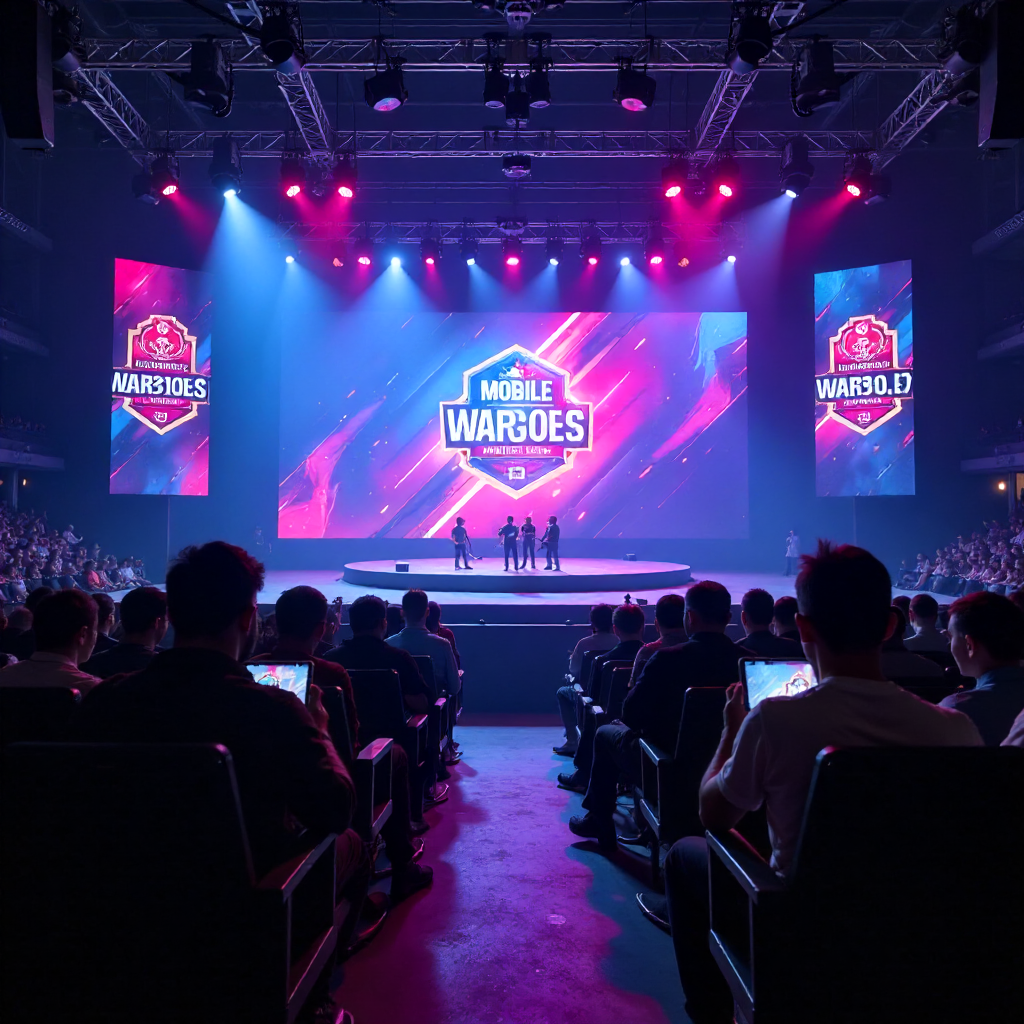
Regional Powerhouses: Where Mobile Esports Is Biggest
Southeast Asia, South Asia, and Latin America lead global mobile esports adoption — and the reason is straightforward: in these regions, the smartphone is the primary gaming device, not a secondary one.
In countries like the Philippines, Indonesia, and Thailand, PC gaming cafés exist but smartphone penetration runs far deeper into the population. Mobile Legends tournaments in the Philippines routinely sell out venues. The M-Series World Championship draws viewership that competes with major PC esports events globally.
South Asia tells a similar story. India's mobile gaming market expanded rapidly after affordable data plans became widely available, and games like BGMI (the Indian version of PUBG Mobile) built competitive communities across tier-2 and tier-3 cities that traditional esports infrastructure never reached.
Latin America's mobile esports scene is anchored by Free Fire, which became the region's dominant title by designing specifically for lower-end devices and slower connections. Garena's approach — optimizing for the actual hardware most players own rather than flagship specs — is a lesson the broader industry has since absorbed. Regional market sensitivity isn't a compromise; it's a competitive advantage.
From Casual Gamer to Competitor: The Mobile Pipeline
Mobile creates a competitive funnel that PC and console esports have never been able to replicate. The path from downloading a game to entering an organized tournament is shorter, cheaper, and more accessible on mobile than on any other platform.
On PC, the casual-to-competitive pipeline requires hardware investment, dedicated peripherals, and often a gaming-specific internet setup. On mobile, someone can go from first download to ranked play on the same device they use for everything else in their life. That frictionless entry point matters enormously for growing the competitive base.
Many mobile titles deliberately design this pipeline. In-game ranked modes, regional leaderboards, and publisher-run grassroots tournaments create structured steps between casual play and organized competition. A player who starts Free Fire for fun on their commute can, within months, be participating in community tournaments without buying a single piece of additional hardware.
For the casual gaming audience, this is the most important trend to understand: mobile esports isn't a separate world that requires a different device or a different identity. It starts exactly where casual play already happens.
Technology Fueling the Next Level: Hardware and 5G
Advances in mobile chipsets and 5G networks are steadily closing the performance gap between mobile and PC/console competitive gaming — not eliminating it, but narrowing it in ways that matter for competitive fairness.
Modern smartphone chipsets like Apple's A-series and Qualcomm's Snapdragon 8 series deliver processing power that would have been desktop-class hardware five years ago. High-refresh displays at 120Hz or higher are now standard on mid-range gaming phones, reducing motion blur and improving reaction-time accuracy. Dedicated cooling systems and gaming-mode software reduce thermal throttling during extended competitive sessions.
5G's contribution is less about raw speed and more about latency reduction. Competitive gaming is extremely sensitive to input lag — the difference between 20ms and 60ms latency is perceptible and consequential in a battle royale firefight. As 5G infrastructure matures in key markets, the reliability of mobile connections during live tournament play improves meaningfully. That said, 5G coverage remains uneven, and tournaments in regions with limited infrastructure still rely on Wi-Fi setups. The technology is a tailwind, not yet a universal solution.
Monetization, Prize Pools, and the Business of Mobile Esports
Mobile esports has developed a functional commercial ecosystem built on three pillars: in-game monetization that funds publisher-run leagues, brand sponsorships targeting mobile-first demographics, and streaming revenue from platforms that understand mobile-native content.
Publishers hold more direct control over mobile esports than in PC esports, where third-party tournament organizers have historically dominated. This creates both stability and risk. Stable because publishers can fund consistent league structures without relying on external investment. Risky because if a publisher deprioritizes a title, the competitive scene can collapse quickly — as players of several discontinued mobile titles have experienced.
Sponsorship in mobile esports skews toward brands that want to reach younger audiences in Southeast Asia and Latin America: telecom companies, consumer electronics brands, and energy drink manufacturers are particularly active. Tournament prize pools have grown steadily, with top-tier events offering amounts that represent genuine professional income in the regions where mobile esports is strongest.
Streaming and content creation have also developed a mobile-native character. Creators who built audiences on mobile gameplay — using phone-recorded sessions, casual commentary, and platform-native formats — often outperform traditional esports broadcasters in mobile-dominant markets. The content creation ecosystem reinforces the competitive one, driving discovery and keeping casual players engaged with the competitive scene even when they're not competing themselves.
Predictions: What Mobile Esports Looks Like by 2028
By 2028, mobile esports will likely be less defined by the "mobile" label and more integrated into the broader competitive gaming conversation — but the shift will be gradual and uneven across regions.
Cross-platform integration is the clearest near-term trend. Several titles already allow mobile and PC players to compete in separate brackets within the same tournament ecosystem. Over the next few years, expect more publishers to experiment with cross-platform ranked modes, using matchmaking to separate player pools by input method rather than device. This blurs the line between mobile and PC esports in ways that benefit the overall competitive ecosystem.
Wearable and AR possibilities remain further out. Smartwatch inputs and augmented reality overlays could eventually create new competitive formats, but the hardware and software infrastructure isn't close to tournament-ready. Think of it as a five-to-ten-year horizon, not a 2028 reality.
Regional expansion will continue, with Africa emerging as the next significant mobile esports market. The same conditions that drove growth in Southeast Asia — high smartphone penetration, limited PC gaming infrastructure, young population — are present across multiple African markets. Publishers who localize early will have a structural advantage.
The competitive scene will also professionalize further. Player contracts, team organizations with mobile-specific rosters, and dedicated coaching staff are already common in the top tiers. By 2028, the infrastructure gap between mobile and PC esports at the professional level will be narrower than it is today — not because PC esports stood still, but because mobile esports built its own mature structures from the ground up.
Frequently Asked Questions
What is mobile esports and how is it different from traditional esports?
Mobile esports refers to organized competitive gaming played on smartphones or tablets. The key difference from traditional PC or console esports is the input method (touchscreen rather than keyboard/mouse or controller), the device accessibility (no dedicated gaming setup required), and the regional demographics — mobile esports has its strongest competitive infrastructure in markets where smartphones are the primary gaming device.
Which mobile games have the largest competitive scenes right now?
The largest competitive scenes currently belong to Mobile Legends: Bang Bang (dominant in Southeast Asia), PUBG Mobile (strong globally, especially South Asia and Europe), Free Fire (Latin America and Southeast Asia), and Honor of Kings (China and expanding internationally). Each has publisher-backed league structures and annual world championships.
Can casual mobile gamers realistically compete in esports tournaments?
Yes — more realistically than in PC or console esports. Most major mobile titles offer in-game ranked modes and publisher-run grassroots tournament programs that start at very low entry levels. Reaching the professional tier requires serious commitment, but participating in organized competition is genuinely accessible to dedicated casual players without any additional hardware investment.
How does 5G impact mobile esports performance?
5G primarily reduces network latency, which is the delay between a player's input and the game's response. Lower latency means more responsive gameplay, which matters significantly in fast-paced competitive titles. The practical impact is most noticeable in regions where 4G connections were congested or unreliable — 5G provides a more stable competitive environment. In areas with strong existing 4G infrastructure, the improvement is real but less dramatic.
Is mobile esports growing faster than PC or console esports?
By most indicators, mobile esports is growing at a faster rate, primarily because it's expanding into markets that PC and console esports never meaningfully reached. The absolute audience size for established PC esports titles remains larger in many Western markets, but the growth trajectory for mobile — driven by Southeast Asia, South Asia, and Latin America — points toward continued rapid expansion through the end of the decade.